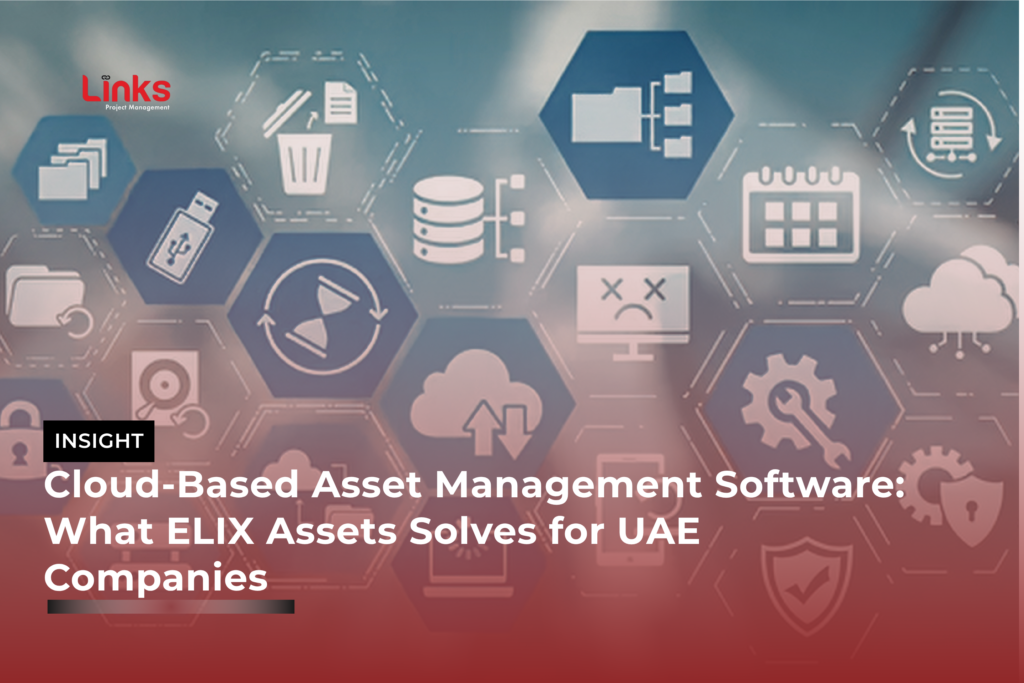
Cloud-Based Asset Management Software: What ELIX Assets Solves for UAE Companies
A company can own hundreds or thousands of valuable assets and still struggle to answer a simple question: Where is our equipment, who is using it, and when was it last verified? For businesses across Dubai, Abu Dhabi, Sharjah, and the wider UAE, physical asset management becomes increasingly complex as operations expand. Office equipment is assigned to employees, machinery moves between locations, maintenance schedules are managed separately, and finance teams rely on spreadsheets that may not reflect what physically exists. These disconnected processes can create unnecessary purchases, missing equipment, inaccurate asset registers, and time-consuming reconciliation exercises. Cloud-based asset management software helps businesses replace fragmented records with a centralized system for managing physical assets. ELIX Assets is an asset management and tracking platform designed to help organizations improve asset visibility, inventory control, maintenance monitoring, and operational accountability. By bringing asset records, identification technologies, and management workflows together, ELIX Assets addresses common problems faced by UAE businesses managing equipment across multiple departments and locations. What Is Cloud-Based Asset Management Software? Cloud-based asset management software is a digital platform that allows organizations to maintain and access asset information through an internet-connected system. Instead of relying on separate spreadsheets or paper-based records, businesses can maintain a centralized database containing relevant information about their physical assets. This information may include: Cloud-based access can make it easier for authorized teams working in different locations to use consistent asset information. However, cloud access alone does not guarantee accurate records. Organizations still need proper asset identification, verification procedures, and timely data updates. What Is ELIX Assets? ELIX Assets is an asset management platform serving organizations that need better control over physical assets, equipment, and inventory. The platform is positioned around centralized asset tracking, asset assignments, reporting, inventory management, and maintenance monitoring. It supports asset identification workflows involving technologies such as RFID, barcode, and QR codes. For UAE businesses, these capabilities are relevant because assets are frequently distributed across offices, warehouses, project sites, facilities, and operational departments. Rather than treating asset management as an occasional inventory exercise, ELIX Assets helps organizations build a more structured approach to managing equipment throughout its operational lifecycle. 1. Solving the Problem of Scattered Asset Records One of the most common challenges in fixed asset management is fragmented information. Finance may maintain one spreadsheet, IT may maintain another, and operations may use separate equipment lists. As a result, the same asset can appear under different descriptions, locations, or identification numbers. How ELIX Assets Helps A centralized asset management platform provides a common place for recording and reviewing asset information. This can help businesses: For example, a company operating offices in Dubai and Abu Dhabi can maintain a consolidated view of its equipment rather than relying entirely on separate location-based spreadsheets. 2. Improving Asset Location and Assignment Visibility Equipment frequently moves between employees, departments, and operating locations. A laptop may be reassigned to another employee. A maintenance tool may move to another building. A generator may be transferred between project sites. When these movements are not documented, the asset register becomes unreliable. How ELIX Assets Helps Centralized asset assignments and location records help organizations maintain clearer information about where equipment was last recorded and who is responsible for it. For example, an IT department can associate a laptop with its assigned employee and office. If the equipment is transferred, the corresponding record can be updated through the organization’s asset management process. It is important to distinguish recorded asset location from continuous physical tracking. Barcode and QR code scanning do not independently transmit live location data, and RFID-based location capabilities depend on the supporting infrastructure. 3. Making Physical Asset Verification Easier Physical asset verification is essential for confirming that equipment recorded in a system actually exists. However, verifying thousands of assets manually can require considerable administrative effort. Businesses may need to inspect equipment across: How ELIX Assets Helps By combining asset records with barcode, QR code, or RFID identification workflows, organizations can establish a more structured verification process. A typical workflow involves identifying the physical asset, reading its tag, matching it to the corresponding record, and documenting discrepancies. This can help reduce manual record matching and improve the consistency of asset verification. 4. Reducing Missing and Misplaced Equipment Missing equipment does not always indicate theft. Assets may have been transferred without documentation, placed in storage, reassigned, or removed for maintenance. Without reliable records, businesses may purchase replacements even when the original equipment is still available. How ELIX Assets Helps Centralized tracking and assignment records make it easier to investigate equipment that cannot be located. For example, a facilities team may determine that a cleaning machine was last assigned to a different building. Clear records help employees identify where to begin their investigation and who may have custody of the asset. Asset tracking cannot eliminate every equipment loss, but it can improve accountability and reduce avoidable uncertainty. 5. Supporting Preventive Maintenance Asset management is not limited to identifying where equipment is located. Organizations also need to understand whether their equipment is functioning properly and when servicing may be required. Poor maintenance visibility can result in: How ELIX Assets Helps ELIX Assets is positioned to support maintenance monitoring alongside asset tracking. This gives organizations a more connected approach to reviewing equipment information and maintenance needs. For example, a facility management company can use its asset records to identify equipment requiring attention and coordinate maintenance activity. The exact maintenance scheduling and notification capabilities should be confirmed during product evaluation. 6. Improving Fixed Asset Reconciliation Finance teams need reliable asset records to support accounting and audit processes. Problems arise when the accounting register does not match the equipment physically present. Common discrepancies include: How ELIX Assets Helps A centralized asset register, combined with physical verification and reporting, can help finance and operations teams identify discrepancies more efficiently. For example, a company can compare verified equipment records with its fixed asset register and investigate differences. The software supports the management of asset information, but organizations must still apply their relevant