
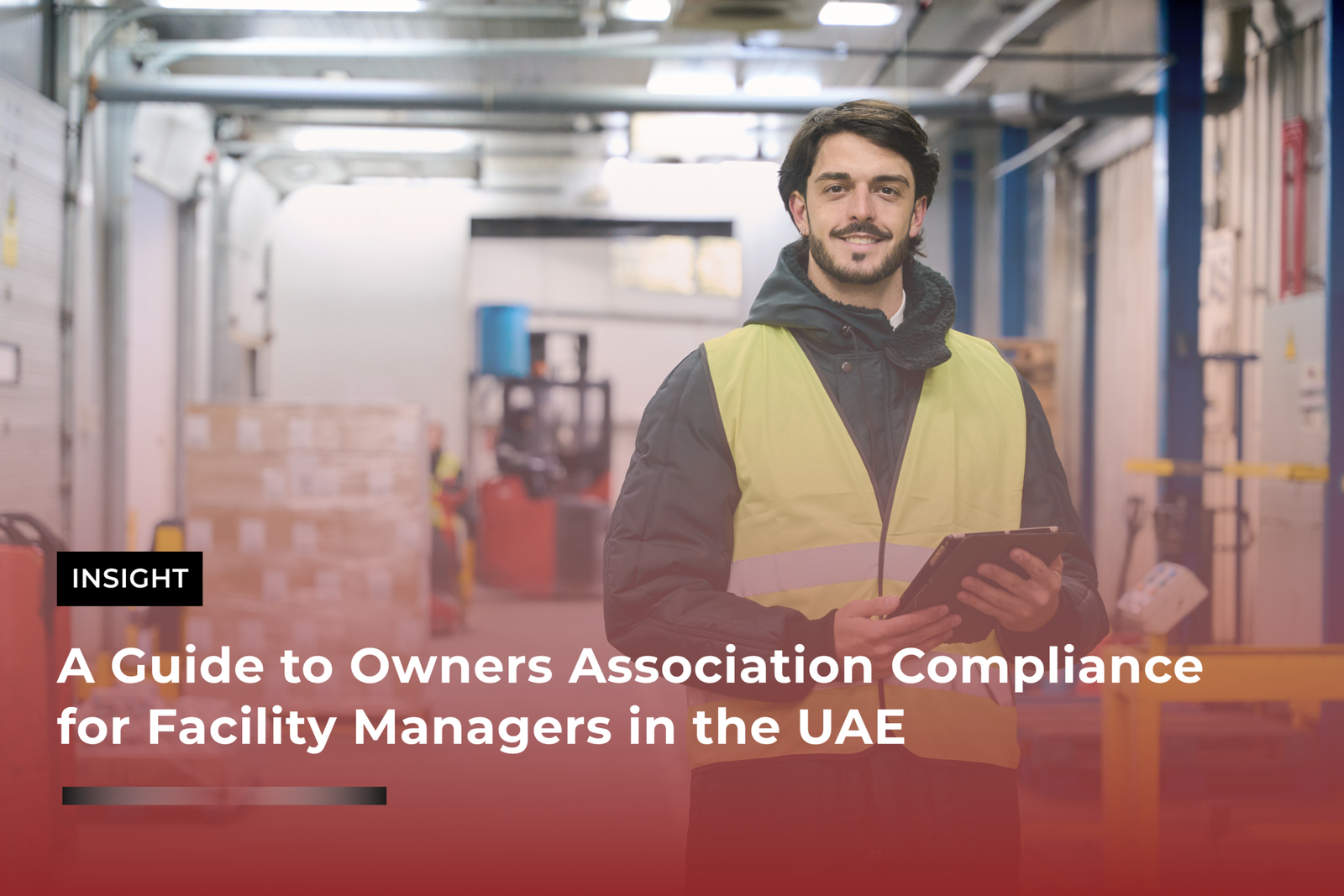
Facility managers play a vital role in maintaining the safety, functionality, and long-term value of residential and commercial properties across the UAE. In jointly owned developments, they also support property managers and Owners’ Associations by ensuring that building assets, maintenance activities, and operational records are properly managed.
Maintaining compliance with the applicable requirements for jointly owned properties goes beyond routine maintenance. It requires structured asset management, accurate documentation, preventive maintenance planning, financial transparency, and effective coordination between all stakeholders.
This guide explains the key areas facility managers should focus on to support Owners’ Association compliance and maintain well-managed communities.
Why Compliance Matters
Well-managed communities benefit from:
- Better asset performance
- Improved resident satisfaction
- Lower long-term maintenance costs
- Greater financial transparency
- Higher property values
- Easier audit preparation
A proactive compliance strategy also helps reduce operational risks and unexpected repair costs.
Maintain a Complete Asset Register
Every shared asset should be documented in a centralized register.
Typical assets include:
- Elevators
- HVAC systems
- Pumps
- Fire protection systems
- Generators
- Water tanks
- Electrical equipment
- Lighting systems
- Landscaping assets
- Parking equipment
The asset register should include:
- Asset ID
- Location
- Installation date
- Manufacturer details
- Warranty information
- Maintenance schedule
- Expected useful life
Implement Preventive Maintenance
Preventive maintenance is essential for extending equipment life and reducing emergency repairs.
A maintenance plan should include:
- Routine inspections
- Manufacturer-recommended servicing
- Safety testing
- Performance monitoring
- Maintenance history
Keeping complete service records demonstrates effective asset management and supports long-term planning.
Keep Accurate Maintenance Documentation
Documentation should include:
- Work orders
- Inspection reports
- Service contracts
- Maintenance logs
- Equipment certifications
- Testing reports
- Repair history
Well-organized records simplify audits and improve operational transparency.
Support Long-Term Capital Planning
Facility managers should work with property managers and Owners’ Associations to identify:
- Assets nearing end of life
- Major replacement projects
- Refurbishment requirements
- Estimated future capital costs
This information supports reserve fund planning and helps communities avoid unexpected financial pressures.
Conduct Regular Asset Inspections
Routine inspections help identify:
- Equipment deterioration
- Safety concerns
- Performance issues
- Maintenance priorities
Early intervention reduces repair costs and improves asset reliability.
Improve Contractor Management
Effective contractor management includes:
- Monitoring service quality
- Verifying maintenance completion
- Reviewing compliance documentation
- Evaluating contractor performance
- Maintaining service records
Consistent oversight improves operational standards throughout the property.
Strengthen Health and Safety Compliance
Facility managers should ensure:
- Fire protection systems are maintained
- Emergency equipment is operational
- Safety inspections are completed
- Critical assets remain compliant with applicable standards
Safety should remain a continuous operational priority.
Use Technology for Better Compliance
Modern facility management solutions provide:
- Digital asset registers
- Preventive maintenance scheduling
- Mobile inspections
- Barcode and QR code asset tracking
- Maintenance reporting
- Asset lifecycle management
Digital systems improve efficiency while reducing manual administration.
Best Practices
Successful facility managers should:
- Maintain accurate asset records
- Schedule preventive maintenance
- Perform regular inspections
- Keep detailed documentation
- Review contractor performance
- Plan for future capital expenditure
- Continuously monitor asset condition
Final Thoughts
Supporting Owners’ Association compliance requires more than responding to maintenance requests. It involves managing assets strategically, maintaining accurate documentation, planning for future capital expenditure, and ensuring that building systems continue to perform efficiently throughout their lifecycle.
By combining structured processes with modern asset management technology, facility managers can improve operational performance, support financial planning, and contribute to the long-term success of jointly owned communities across the UAE.
FAQs
1. What is the role of a facility manager in jointly owned properties?
Facility managers oversee the maintenance, operation, inspection, and performance of shared building assets while supporting long-term property management objectives.
2. Why is an asset register important?
It provides a complete inventory of building assets, helping with maintenance planning, budgeting, audits, and lifecycle management.
3. How does preventive maintenance support compliance?
It reduces equipment failures, extends asset life, improves safety, and maintains complete maintenance records.
4. What technology can improve facility management?
Asset management software, mobile inspections, barcode labels, QR codes, RFID tracking, and preventive maintenance platforms.
5. How often should building assets be inspected?
Inspection frequency depends on the asset type, manufacturer recommendations, and maintenance strategy, with critical assets requiring more frequent inspections.